Cooperation Needs a Memory
Why durable cooperation needs memory, clear boundaries, proportionate consequences, and a credible path back after failure.

These posts and blog articles explore the forces that really shape human behaviour, especially in business, branding, and leadership. Using the Old Brain/New Brain framework from The Divided Brain, I break down why people decide the way they do, and how that understanding can help you communicate with more clarity, influence, and impact.
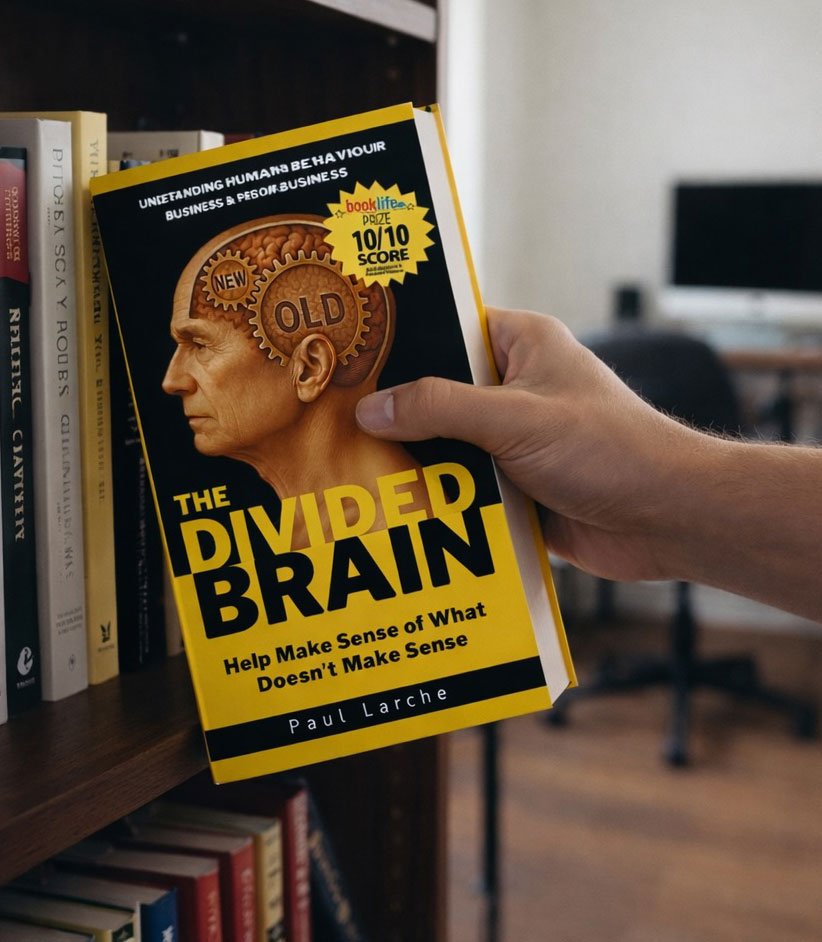
Why durable cooperation needs memory, clear boundaries, proportionate consequences, and a credible path back after failure.
Why accurate answers can miss when the audience is asking an emotional or identity question beneath the practical one.
The first emotional read of a situation can become the frame that shapes every later fact, decision, and brand judgment.
Social proof works because visible confidence and belonging cues lower the emotional risk of choosing, not only because they add evidence.
Attention is not a switch. Learn why emotional state, pressure, and safety shape whether people are available to a brand message.
Brand trust grows when customers can predict how an organization will behave across repeated moments, not only what it promises.
Pattern detection helps humans move quickly, but modern information overload can make weak signals feel certain. The pause matters.
Paul Larche discusses The Divided Brain, context, familiarity, decision-making, trust, consumer behaviour and branding on The Brian Crombie Hour.
People do not only ask if an idea is true. They ask what joining it says about identity, belonging, and the story they want to live in.
Manual mode is the trained pause between reaction and response. Learn how metacognition helps leaders notice and redirect emotional momentum.